This is the long-form companion to the rover case study. The case study is the clean version: sensor to state to meaning, two working systems, here is what I owned. This is the messy version, the one with the brownouts and the copy-paste bug and the simulated robot that kept flipping onto its back. It is worth telling because the mess is where the actual engineering happened.
The brief
The project was for INF 208, Embedded Systems, a course where five of us had to ship something real: a German technical report, a public GitHub repo, a short video, and a working demo. The hard constraint was that the system had to use at least two sensors feeding a genuine logical decision algorithm. No decision algorithm, minus fifty points. That single rule shaped everything that followed.
We picked a smart-city problem to hang it on. Cities find potholes and broken pavement with expensive survey vehicles or by sending people out with clipboards. The idea: a cheap mobile robot that drives a surface, feels what the ground does to it, and tags every defect with a GPS coordinate. Two sensors fell out naturally, an IMU for vertical acceleration and tilt, a GPS for position, and the decision algorithm classified each patch of ground as flat, bump, or pothole.
Why we built it twice
We ended up with two parallel systems, and that was a choice, not an accident.
A physical robot proves you can survive real noise, real wiring, and a GPS that refuses to get a fix indoors. But the ambitious perception, a proper EKF fusing IMU and GPS, a live slope and roughness map, is exactly the kind of thing you do not want to debug for the first time while also fighting a power supply. So the simulation came first, as the place to get the algorithms right, and the hardware came second, as the place to prove they hold up when reality pushes back.
Part one: the simulation
The digital twin lives in ROS 2 Jazzy and Gazebo Harmonic, modelled on the kit we were about to build: a small four-wheel skid-steer chassis. We brought it up in phases, plain driving first, then sensors, then the perception stack on top.
The honest surprise was that the hardest part was physics, not perception. Skid-steer robots turn by dragging their wheels sideways, and a naive friction model in simulation makes them want to flip onto their backs the moment they turn. We spent real time on this, working through friction models and even switching the underlying physics engine, before the robot would just drive across rough terrain like a robot instead of a stunt car.
Once it drove, the perception came together fast. A dual-EKF setup from
robot_localization fuses the fast IMU with the slow GPS into one state estimate.
On top of that, a mapping node turns state into meaning: it reads the gravity
direction to get slope, isolates the high-frequency vertical shake to get
roughness, and writes both into a grid where every cell remembers the worst it
felt there, so a single sharp pothole never gets averaged away.
By the end it was a single launch command: simulation, controller, localization, mapping, and visualization, all up at once, with a service to save the finished map to disk. That is the version that lives on GitHub.
Part two: the hardware
Then we had to make it real, and reality had opinions.
The first version worked, and was wrong
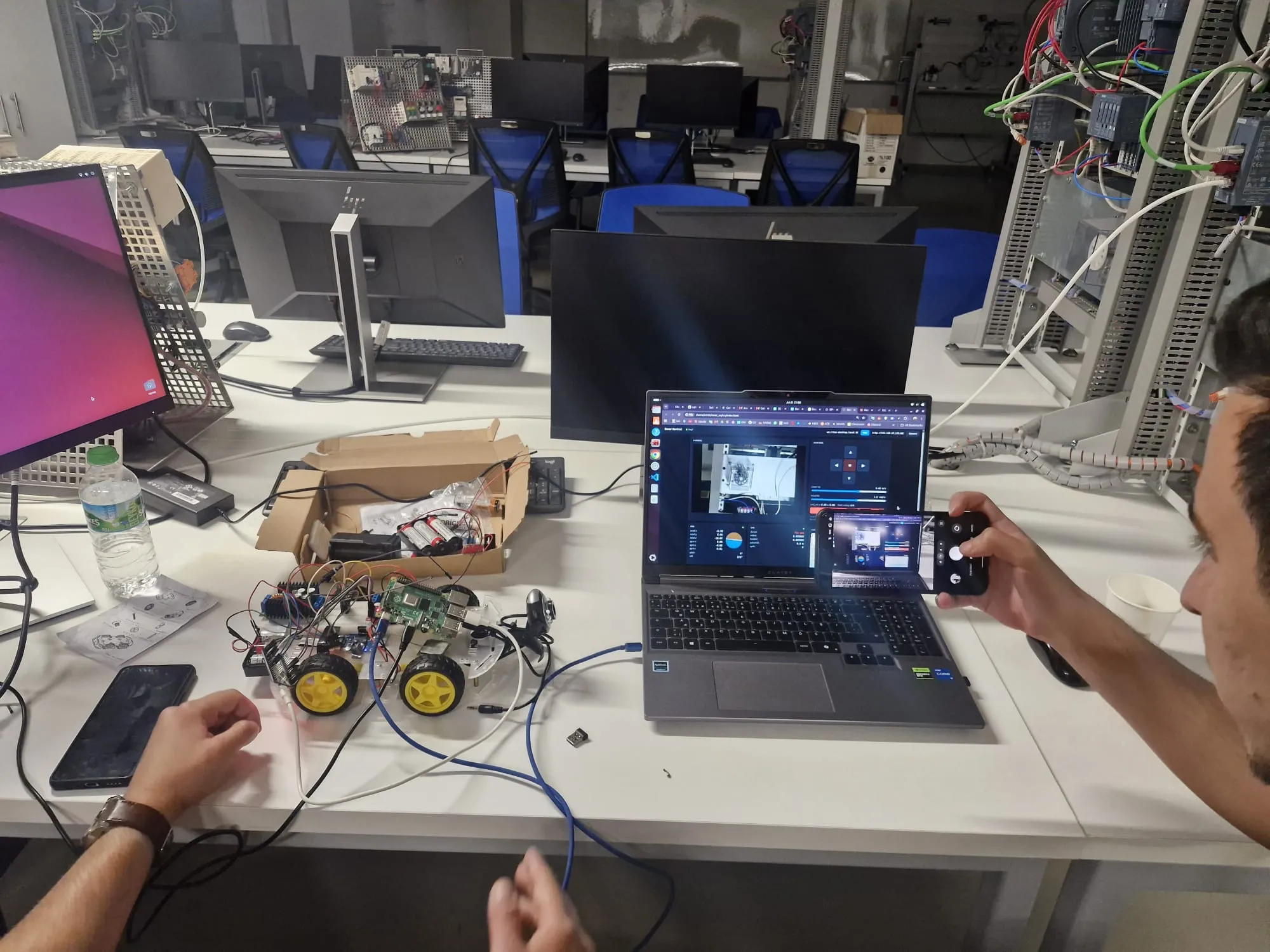
The very first physical build was an ESP32 with its own Wi-Fi access point serving a little control web page. It drove. It also was not part of any robotics ecosystem, which meant none of the simulation’s tooling could ever touch it. So we threw the architecture away and migrated the ESP32 to micro-ROS, turning it into a ROS 2 client bridged to the Pi over USB serial through a Docker agent. That single decision is what made the physical robot and the simulation speak the same language.
The bug that cost an evening
The migration brought a genuinely stupid, genuinely instructive bug. ROS message
types in C have double underscores in their names, like sensor_msgs__msg__Imu.
When you copy firmware between a chat window and an editor, some tools silently
collapse those double underscores into single ones. Every build failed with
cryptic type errors, and the code looked correct. The fix was humbling: stop
pasting code through things that rewrite it, keep it in a real file. I think about
that one every time a build fails for “no reason.”
The brownout saga
The robot would not stay alive under load. The moment the motors drew current, the whole thing reset. This was not a software bug at all, it was power and grounding: thin shared-ground wiring and a split 5 V supply meant the motor surge dragged the logic rail down with it.
The fix was textbook embedded design once we stopped treating power as plumbing: one star-point ground so the ESP32 and the motor driver share a clean reference, thick short leads, a separate clean rail for the sensors so their regulators stay out of dropout, and the camera and ESP32 fed from a single 5 V domain so nothing back-feeds anything else. After that it just ran.
GPS does not love being indoors
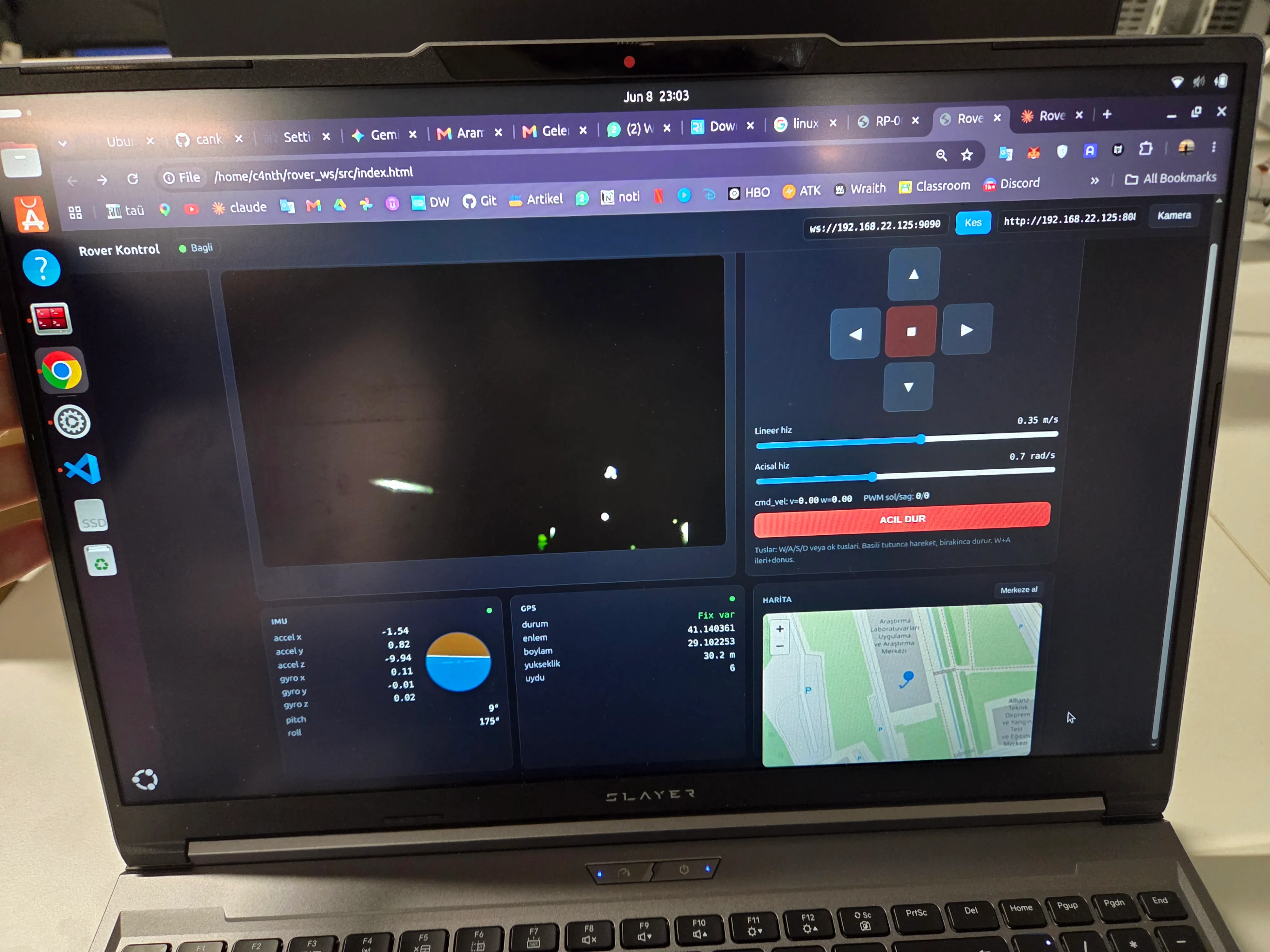
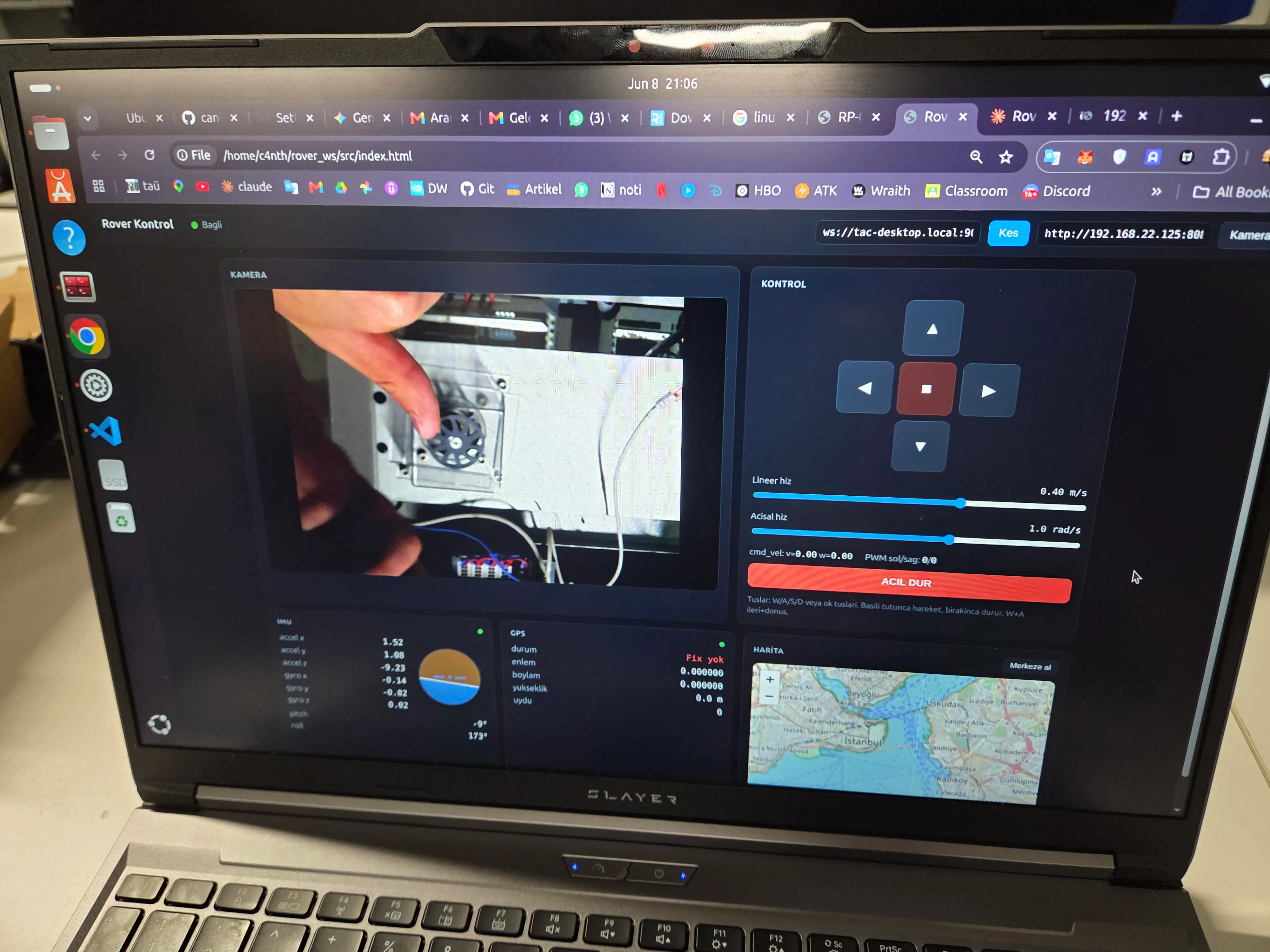
A NEO-6M GPS module under a lab roof is a sad device. A cold start with no clear sky view takes minutes, and for a while we thought the module was broken. It was not, it just needed open sky and patience. We added a live satellite count to the dashboard so we could see the fix being earned instead of guessing, and the first time the marker snapped onto our actual coordinates on campus was one of the better moments of the project.
Smaller cuts
There were others, each its own little lesson. The camera stream kept dying with I/O errors until we realised the resolution we asked for simply did not fit through the USB bandwidth, so we dropped it. The I2C bus could lock the whole loop if the IMU was missing, so we made the firmware degrade gracefully and keep going without it. None of these are glamorous. All of them are the difference between a demo that works once and a system you can hand someone.
What I actually learned
Three things stuck, beyond the specific fixes:
- Split hard real-time from heavy compute. The ESP32 owns microsecond timing, the Pi owns everything that wants an operating system. That one boundary made both halves simpler.
- Power and grounding are the platform, not a detail. More of our “software” problems turned out to be electrical than I expected going in.
- Document the failures. The engineering log of what broke and how we fixed it ended up being the strongest part of the writeup, because it is the part that actually proves we learned something. Anyone can show a robot that drives. The value is in knowing exactly why it did not, right up until it did.
If you want the architecture and the numbers, the case study lays them out cleanly. This was the story underneath them.